


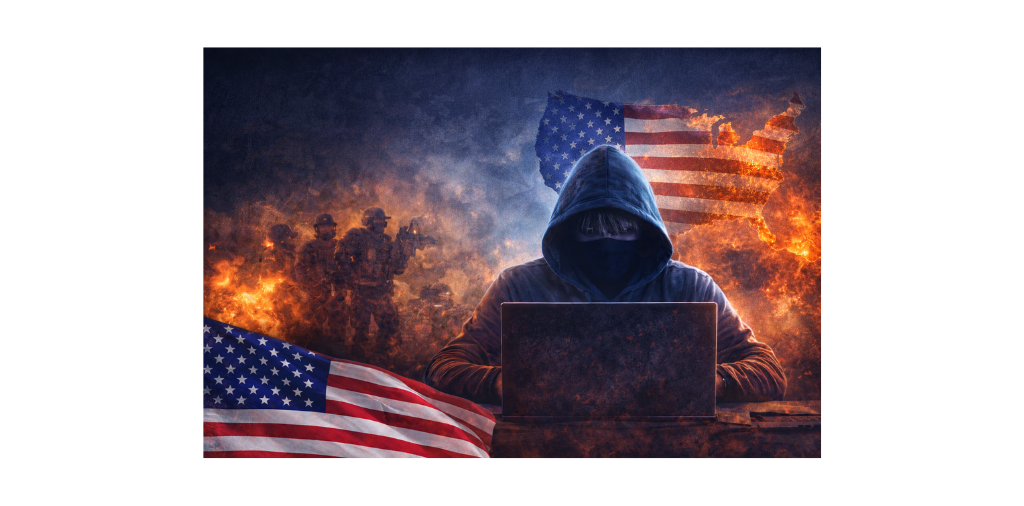
Across the United States, youth radicalization has become an increasingly complex security and safeguarding challenge for schools, municipalities, healthcare systems, faith-based institutions, corporations, and public-facing venues. What was once viewed primarily through an academic or counterterrorism lens is now intersecting directly with everyday safety, threat-assessment programs, and crisis-management planning.
Unlike earlier eras dominated by overseas extremist recruitment pipelines, today’s risk environment is shaped heavily by domestic ideological polarization, online ecosystems, lone-actor mobilization, and rapid grievance amplification through social media platforms and encrypted communications. For organizations responsible for protecting people and facilities, understanding how youth radicalization unfolds, and how it differs within the U.S. context, is now essential.
The American Landscape, Domestic Drivers and Digital Acceleration
In the United States, youth radicalization frequently emerges from domestic political polarization, conspiracy-driven narratives, racial or identity-based grievances, school-related conflicts, online harassment cultures, and reactions to major geopolitical or national events. Firearms accessibility, prior mass-casualty attacks, and extensive media coverage of violence also shape how threats manifest compared to many other countries.
Online platforms play an outsized role. Algorithm-driven recommendation systems can gradually move young users from mainstream political or social content toward increasingly extreme material. Livestreams, gaming chats, fringe forums, short-form video platforms, and private messaging apps provide fertile ground for recruiters and influencers to cultivate identity, resentment, and perceived moral justification for violence.
Radicalization is rarely sudden. It often follows a progression, from exposure to emotionally charged narratives, to social reinforcement in digital communities, to adoption of absolutist worldviews, and in more advanced stages, fixation on violent actors or tactical discussion. In the U.S., this trajectory is frequently associated with lone-actor threats rather than coordinated terrorist cells, making detection more difficult and intervention timelines shorter.
Who May Be Most Vulnerable
There is no single profile for at-risk youth. Vulnerability typically stems from overlapping pressures such as social isolation, bullying, academic failure, family instability, identity struggles, mental-health stressors, or feelings of marginalization. Exposure to online harassment or extremist propaganda can intensify these factors, particularly when combined with grievance-based narratives tied to domestic politics, immigration debates, race relations, or global conflicts.
Youth may be drawn into a wide spectrum of ideological currents, ranging from racially or ethnically motivated extremism and anti-government movements to violent anarchism, religious extremism, or hybrid conspiracy-based belief systems that blur traditional categories. In the U.S., the mixing of multiple ideologies within online communities is increasingly common, producing unpredictable threat vectors.
Behavioral and Digital Warning Signs
Parents, educators, campus safety teams, corporate security leaders, and community organizations are often the first to notice concerning shifts. Early indicators may include sudden changes in language, increased hostility toward specific groups, withdrawal from longtime friendships, obsession with political violence, admiration for previous attackers, or fixation on weaponry and tactical content.
Digital signals are equally important. Participation in extremist forums, repeated sharing of propaganda, use of coded slogans or symbols, engagement with violent livestreams, or movement into private online channels can suggest escalation. Declining school performance, emotional volatility, secrecy about online activity, and expressions of nihilism or martyrdom should also prompt closer attention.
No single factor proves radicalization. However, clusters of behaviors that intensify over time, especially when paired with grievance fixation or violent rhetoric, warrant structured assessment and early intervention rather than dismissal or purely disciplinary responses.
Prevention and Early Intervention in the U.S. Context
Effective prevention in the United States depends heavily on multidisciplinary cooperation. Schools, behavioral-threat-assessment teams, counselors, law-enforcement partners, mental-health providers, and community leaders all play a role in identifying concerning patterns before they escalate.
Protective strategies include:
- Media-literacy education that helps young people recognize manipulation, misinformation, and emotionally exploitative content online.
- Trusted relationships with adults who create space for open conversations about identity, grievances, and world events.
- Structured reporting pathways so students, employees, or parents know how to raise concerns safely.
- Threat-assessment frameworks that focus on behavior-based indicators and de-escalation rather than ideology alone.
- Crisis-intervention programs that prioritize support networks, counseling, and reintegration rather than stigmatization.
Institutions can strengthen resilience by implementing digital-safety policies, monitoring public-facing online environments tied to their facilities or student populations, training staff to recognize warning signs, and coordinating with local partners before situations become acute.
How Intelligence-Led Monitoring Supports U.S. Organizations
In today’s fast-moving threat environment, organizations increasingly rely on analyst-driven intelligence to track extremist ecosystems, online grievance narratives, mobilization indicators, and protest activity that could spill into physical-world risk.
BlueSky Risk Intelligence Monitoring supports U.S. clients through real-time monitoring, behavioral-threat indicators, and forward-looking analysis that helps decision-makers understand when online rhetoric is shifting toward operational intent. Our teams examine how digital communities evolve, identify emerging narratives linked to violence, and provide actionable insights so security leaders can adjust postures, protect facilities, and coordinate response plans before incidents unfold.
This intelligence-led approach is particularly critical in the United States, where lone-actor attacks, school-related threats, and ideologically fluid movements can develop rapidly and with limited warning.
Staying Ahead of an Evolving Risk Environment
Youth radicalization in the United States reflects broader social polarization, technological acceleration, and shifting threat patterns. Organizations responsible for safeguarding people, from school districts and hospitals to municipalities and corporate campuses, cannot rely solely on reactive security models.
Awareness, early detection, community-based intervention, and intelligence-driven monitoring remain the most effective tools for reducing long-term risk. By understanding how youth radicalization differs within the American landscape and preparing for its evolving pathways, leaders can take proactive steps to protect their communities before online extremism translates into real-world harm.
If your organization would like to learn more about how BlueSky supports early-warning intelligence, threat assessment, and disruption forecasting across the United States, our team is always ready to start the conversation.