


Article written by Chief Operating Officer,
Don MacAlister.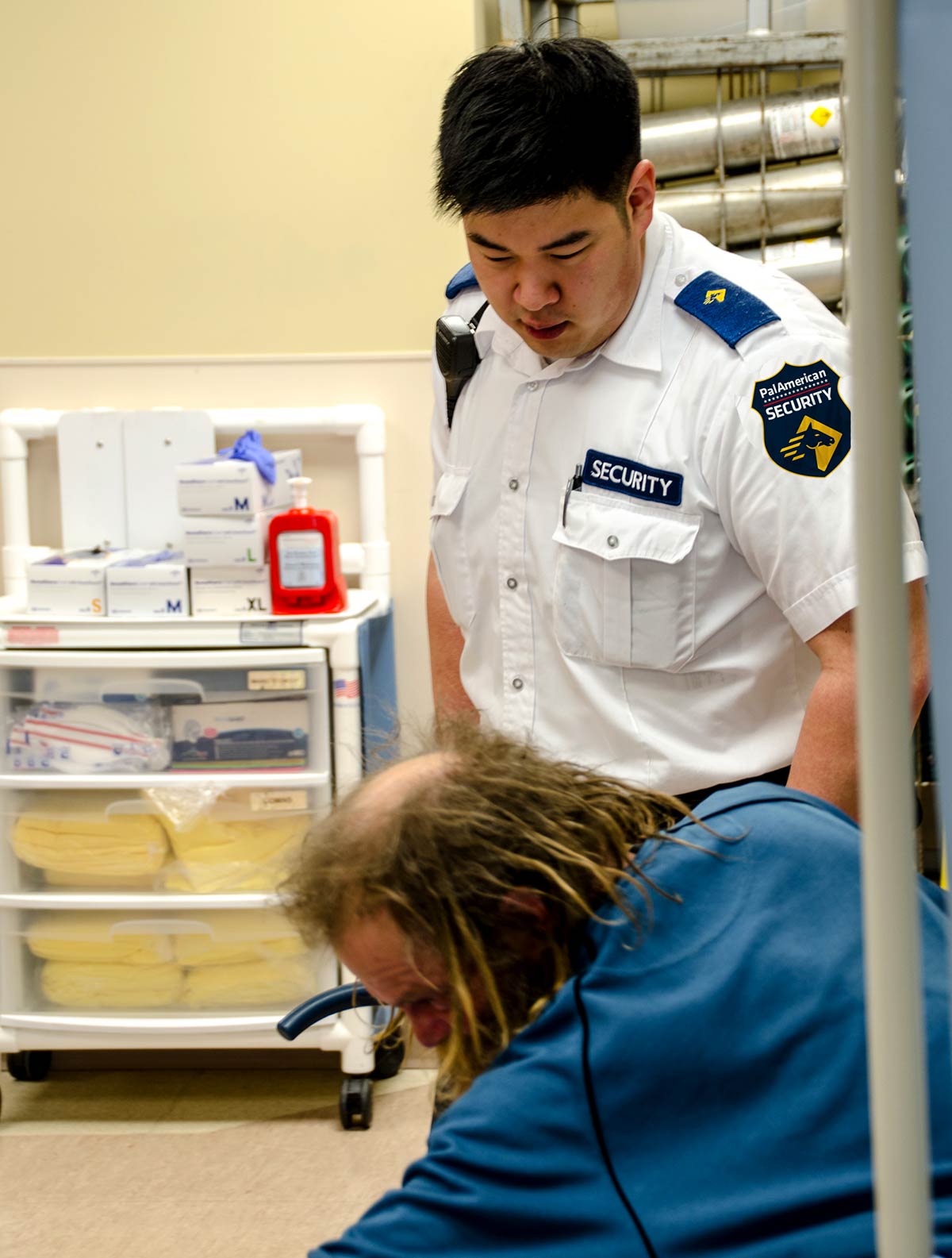
Those of us who have responded to a call for security assistance in a hospital know there is always a process of mental preparation as we make our way quickly to the location. What situation might I be headed into? What stage of escalation might the aggressor be in? Has anyone been hurt? Are there weapons involved? Is someone managing the incident at the scene already? Or am I assuming that role when I get to the scene?
But what happens when we arrive at the scene and the situation is already under control, as is often the case? Maybe the behavior that was causing concern has ended, or indeed never emerged, the threat has dissipated, and the unit is already returning to a “business as usual” state. After gathering information at the scene to ensure all that needs to be done is in fact being handled, what else should we be thinking about?
We need to be conscious that healthcare workers and support staff on the unit are observing our response to this “false alarm.” If the words we use or the body language we display conveys to those at the scene that this was “a waste of valuable security time,” and that security was not really needed in this case, then we’ll have impacted negatively on our mission to create and maintain a safe and accessible environment for patients to receive care and for staff to safely deliver it.
Our commitment to a patient-centric approach to healthcare security will not be supported by our words and actions, and over time, we’ll lose credibility in our program. More frighteningly, staff will stop calling us in a proactive manner. Our programs will be pushed back in time to the reactive models of the past that so many of us have worked hard to correct. If this sounds like an extreme outcome for a seemingly innocuous action – have no doubt, this is what will occur over time.
We need to take the opposite approach if security arrives and our involvement is not needed. We need to convey that this is the best possible outcome for such an event. There is nothing more important to security than to be utilized at the earliest possible point in any situation involving aggression or potential aggression. We do this with a smile and we do this with sincerity, and we leave the staff at the scene feeling like it is always ok to activate that duress alarm or call for the overhead response Code to be initiated. We do that because we know that the best outcomes in situations involving aggressive behavior come from interventions at the earliest possible point in the escalation continuum.
Healthcare workers and support staff are increasingly receiving training in the management of aggressive behavior, where this early intervention approach is emphasized. In many cases, staff can defuse potentially aggressive situations themselves. Although the decision to call security for assistance, through whatever means, is always subjective and must always be supported. Nowhere is this reinforcement more important than through the security responders themselves.
Calling security early and often to manage potentially aggressive situations results in better outcomes in terms of reducing the risk of injury to staff, patients and to the aggressors themselves.
About Don MacAlister:
Don has co-written the industry-recognized "must have" resource for any healthcare security and safety program, Hospital and Healthcare Security, 6th edition, with Tony York, COO for Denver-based HSS Inc. The recognized leading text in the healthcare security industry, Hospital and Healthcare Security, 6th Edition takes the reader on a journey from the fundamentals of healthcare security to the complex and strategic issues facing today’s healthcare security leaders, such as their role in healthcare facility design, policy and security master planning, as well as services delivered outside of traditional hospital settings.